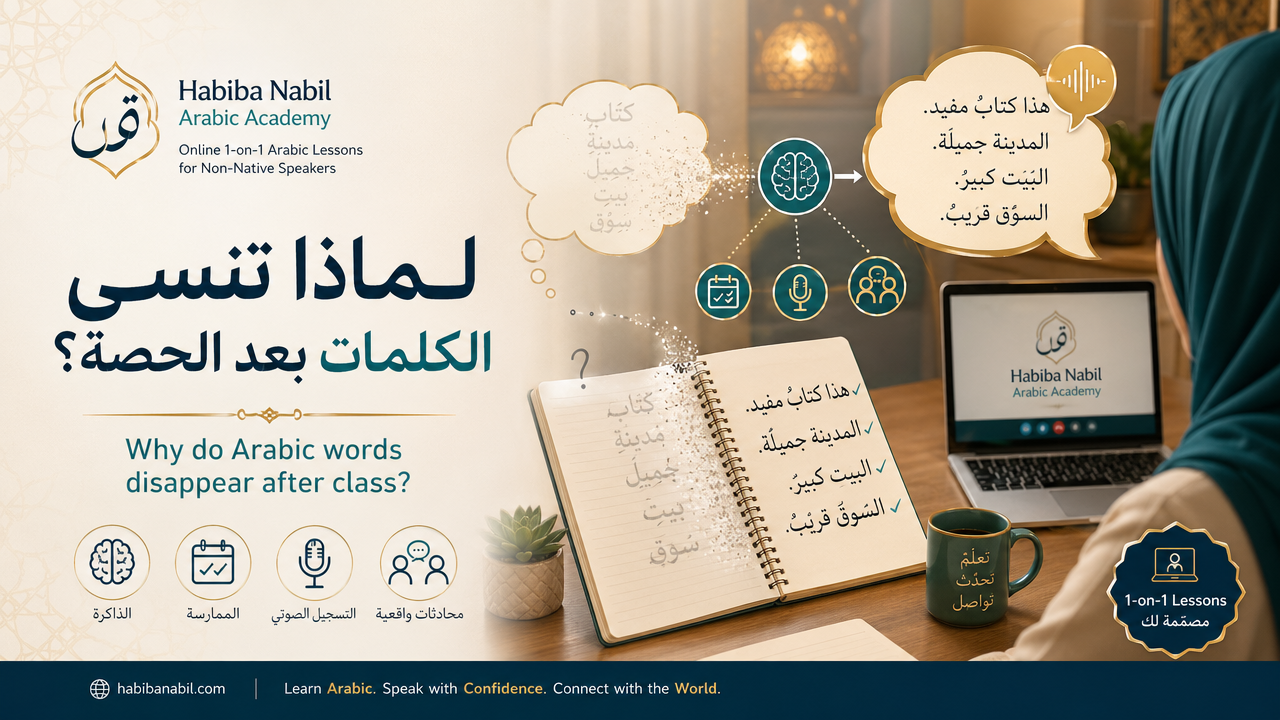
Sometimes a student understands the words during the lesson, repeats them correctly, and uses them… then forgets everything two days later.
لماذا ينسى الطالب الكلمات بعد الحصة؟
Why Does a Student Forget Words After the Lesson?
في نهاية إحدى الحصص، كان أحد طلابي سعيدًا جدًا.
At the end of one lesson, one of my students was very happy.
كان قد تعلّم كلمات جديدة، ورددها أكثر من مرة، واستخدمها في جمل قصيرة.
He had learned new words, repeated them several times, and used them in short sentences.
قلت له كلمة بالعربي، فكان يعرف معناها.
I said an Arabic word, and he knew its meaning.
سألته سؤالًا، فكان يجيب.
I asked him a question, and he answered.
عملنا تدريبًا سريعًا، وكان أداؤه جيدًا.
We did a quick practice activity, and he performed well.
لكن في الحصة التالية، حدث شيء مألوف جدًا.
But in the next lesson, something very familiar happened.
سألته عن بعض الكلمات نفسها… فتوقف.
I asked him about some of the same words… and he froze.
نظر إليّ وقال: “أنا كنت عارفها… بس نسيتها.”
He looked at me and said: “I knew it… but I forgot it.”
هذه الجملة تتكرر كثيرًا مع متعلمي اللغة العربية.
This sentence is very common among Arabic learners.
والكثير من الطلاب يظنون أن المشكلة في ذاكرتهم.
Many students think the problem is their memory.
لكن الحقيقة أن نسيان الكلمات بعد الحصة لا يعني دائمًا أن الطالب ضعيف.
But the truth is, forgetting words after class does not always mean the student is weak.
أحيانًا الطالب لم ينسَ الكلمة تمامًا.
Sometimes the student has not completely forgotten the word.
هو فقط لا يستطيع الوصول إليها بسرعة عندما يحتاجها.
He simply cannot access it quickly when he needs it.
وهنا يوجد فرق مهم جدًا.
And here there is a very important difference.
هناك كلمات يفهمها الطالب عندما يراها أو يسمعها.
There are words the student understands when he sees or hears them.
وهناك كلمات يستطيع استخدامها بنفسه في الكلام.
And there are words he can use by himself in speaking.
النوع الأول اسمه فهم أو recognition.
The first type is understanding or recognition.
النوع الثاني اسمه استخدام أو active recall.
The second type is use or active recall.
كثير من الطلاب يصلون للنوع الأول فقط.
Many students only reach the first type.
يعني عندما يسمعون كلمة مثل “أريد” يعرفون أنها تعني “I want”.
This means when they hear a word like “أريد”, they know it means “I want.”
لكن عندما يريدون أن يقولوا جملة بأنفسهم، لا تأتي الكلمة بسرعة.
But when they want to say a sentence by themselves, the word does not come quickly.
وهذا طبيعي جدًا في تعلم اللغة.
And this is completely normal in language learning.
الكلمة لا تثبت لأنها ظهرت مرة واحدة في الحصة.
A word does not become fixed because it appeared once in the lesson.
ولا تثبت فقط لأن الطالب كتبها في الدفتر.
And it does not become fixed only because the student wrote it in a notebook.
الكلمة تثبت عندما يسمعها الطالب، ويقولها، ويكتبها، ويستخدمها في أكثر من موقف.
A word becomes fixed when the student hears it, says it, writes it, and uses it in more than one situation.
لذلك، في تعليم العربية، لا يكفي أن نقول: “احفظ هذه الكلمات.”
That is why, in Arabic learning, it is not enough to say: “Memorize these words.”
لازم نسأل: “كيف سيستخدم الطالب هذه الكلمات؟”
We need to ask: “How will the student use these words?”
في الحصة، قد تكون الكلمة سهلة لأن المعلم يعطي سياقًا واضحًا.
During the lesson, the word may feel easy because the teacher gives clear context.
المعلم يشير للصورة.
The teacher points to the picture.
يكتب المعنى.
He writes the meaning.
يكرر الجملة.
He repeats the sentence.
يعطي اختيارات.
He gives choices.
لكن بعد الحصة، كل هذه المساعدة تختفي.
But after the lesson, all this support disappears.
وهنا نعرف هل الكلمة دخلت في ذاكرة الطالب النشطة أم لا.
And here we discover whether the word entered the student’s active memory or not.
مثلاً، لو الطالب تعلم كلمات الطعام:
For example, if the student learned food words:
ماء، خبز، أرز، دجاج، عصير.
Water, bread, rice, chicken, juice.
قد يقدر يترجمهم داخل الحصة.
He may be able to translate them during class.
لكن هل يستطيع أن يقول:
But can he say:
“أريد عصيرًا من فضلك.”
“I want juice, please.”
“أنا آكل أرزًا ودجاجًا.”
“I eat rice and chicken.”
“لا أريد ماءً، أريد شايًا.”
“I do not want water, I want tea.”
هنا تبدأ اللغة الحقيقية.
This is where real language begins.
لذلك، عندما ألاحظ أن الطالب ينسى الكلمات، لا أعتبر هذا فشلًا.
So when I notice that a student forgets words, I do not treat it as failure.
أعتبره إشارة.
I treat it as a signal.
إشارة أن الكلمات تحتاج إلى مراجعة بطريقة مختلفة.
A signal that the words need to be reviewed in a different way.
ليس فقط قراءة القائمة مرة أخرى.
Not just reading the list again.
بل استخدامها في أسئلة، مواقف، ألعاب سريعة، تسجيل صوتي، وواجب قصير.
But using them in questions, situations, quick games, voice recordings, and short homework.
في إحدى الحصص، استخدمت مع الطالب طريقة بسيطة.
In one lesson, I used a simple method with the student.
أخذنا خمس كلمات فقط.
We took only five words.
لم نأخذ عشرين كلمة.
We did not take twenty words.
ثم عملنا ثلاث خطوات:
Then we did three steps:
Input → Practice → Output
أولًا، سمع الطالب الكلمات في جمل قصيرة.
First, the student heard the words in short sentences.
ثانيًا، أكمل جملًا ناقصة باستخدام الكلمات.
Second, he completed missing sentences using the words.
ثالثًا، استخدم الكلمات في موقف حقيقي.
Third, he used the words in a real situation.
الموقف كان بسيطًا: أنت في مطعم وتريد أن تطلب الطعام.
The situation was simple: You are in a restaurant and you want to order food.
في البداية، كان يحتاج إلى تذكير.
At first, he needed reminders.
ثم بدأ يتذكر كلمة واحدة.
Then he started remembering one word.
بعد ذلك، بدأ يبني جملة.
After that, he started building a sentence.
وفي آخر الحصة، استخدم الكلمات في حوار قصير.
By the end of the lesson, he used the words in a short dialogue.
الفرق لم يكن في عدد الكلمات.
The difference was not in the number of words.
الفرق كان في طريقة استخدام الكلمات.
The difference was in how the words were used.
ولهذا السبب، الواجب مهم جدًا بعد الحصة.
For this reason, homework is very important after the lesson.
ليس واجبًا طويلًا أو مرهقًا.
Not long or exhausting homework.
لكن واجب قصير يوقظ الكلمات مرة أخرى.
But short homework that wakes the words up again.
مثلاً:
For example:
استمع إلى الجمل مرة واحدة.
Listen to the sentences once.
اكتب ثلاث جمل بالكلمات الجديدة.
Write three sentences using the new words.
سجل صوتك وأنت تجاوب على سؤال بسيط.
Record your voice answering a simple question.
هذه المهام الصغيرة تساعد المخ أن يفهم أن الكلمة مهمة، وليست كلمة ظهرت مرة واختفت.
These small tasks help the brain understand that the word is important, not just a word that appeared once and disappeared.
كذلك، التكرار يجب أن يكون ذكيًا.
Also, repetition must be smart.
ليس تكرارًا مملًا.
Not boring repetition.
لكن تكرار داخل مواقف مختلفة.
But repetition inside different situations.
نفس كلمة “أريد” يمكن استخدامها في الطعام.
The same word “أريد” can be used with food.
“أريد ماءً.”
“I want water.”
وفي التسوق.
In shopping.
“أريد هذا القميص.”
“I want this shirt.”
وفي المدرسة.
At school.
“أريد أن أسأل سؤالًا.”
“I want to ask a question.”
وفي العمل.
At work.
“أريد أن أتحدث مع المدير.”
“I want to speak with the manager.”
كل مرة يرى الطالب الكلمة في موقف جديد، تصبح أقوى.
Every time the student sees the word in a new situation, it becomes stronger.
وهنا نصل إلى أهم درس.
And here we reach the most important lesson.
نسيان الكلمات بعد الحصة ليس نهاية الطريق.
Forgetting words after the lesson is not the end of the road.
هو جزء طبيعي من التعلم.
It is a natural part of learning.
لكن يجب أن نتعامل معه بطريقة صحيحة.
But we need to deal with it in the right way.
لا نلوم الطالب.
We do not blame the student.
ولا نعطيه كلمات أكثر وهو لم يستخدم الكلمات القديمة بعد.
And we do not give him more words while he has not yet used the old words.
بل نساعده يحوّل الكلمات من حفظ إلى استخدام.
Instead, we help him turn words from memorization into use.
من قائمة في الدفتر إلى جملة في الفم.
From a list in the notebook to a sentence in the mouth.
من “أنا أعرف هذه الكلمة” إلى “أنا أستطيع أن أستخدم هذه الكلمة.”
From “I know this word” to “I can use this word.”
في Habiba Nabil Arabic Academy، نركز على أن الطالب لا يحفظ الكلمات فقط، بل يستخدمها في كلام حقيقي.
At Habiba Nabil Arabic Academy, we focus on helping students not only memorize words, but use them in real speech.
الحصة تكون 1-on-1، والخطة تكون حسب هدف الطالب: الكلام، الاستماع، القراءة، الكتابة، أو العربي للحياة اليومية والعمل.
The lesson is 1-on-1, and the plan is built around the student’s goal: speaking, listening, reading, writing, or Arabic for daily life and work.
إذا كنت تنسى الكلمات بعد الحصة، فربما لا تحتاج إلى كلمات أكثر.
If you forget words after class, maybe you do not need more words.
ربما تحتاج إلى طريقة أفضل لتثبيت الكلمات واستخدامها.
Maybe you need a better way to activate and use them.
تقدر تبدأ بحصة Single Session مدتها 90 دقيقة بسعر الإطلاق AED 80 بدل AED 120.
You can start with a 90-minute Single Session at the launch price of AED 80 instead of AED 120.
احجز حصة، وخلّينا نحول الكلمات التي تعرفها إلى كلام حقيقي تستخدمه بثقة.
Book a session, and let’s turn the words you know into real speech you can use with confidence.
Why Does a Student Forget Words After the Lesson?
في نهاية إحدى الحصص، كان أحد طلابي سعيدًا جدًا.
At the end of one lesson, one of my students was very happy.
كان قد تعلّم كلمات جديدة، ورددها أكثر من مرة، واستخدمها في جمل قصيرة.
He had learned new words, repeated them several times, and used them in short sentences.
قلت له كلمة بالعربي، فكان يعرف معناها.
I said an Arabic word, and he knew its meaning.
سألته سؤالًا، فكان يجيب.
I asked him a question, and he answered.
عملنا تدريبًا سريعًا، وكان أداؤه جيدًا.
We did a quick practice activity, and he performed well.
لكن في الحصة التالية، حدث شيء مألوف جدًا.
But in the next lesson, something very familiar happened.
سألته عن بعض الكلمات نفسها… فتوقف.
I asked him about some of the same words… and he froze.
نظر إليّ وقال: “أنا كنت عارفها… بس نسيتها.”
He looked at me and said: “I knew it… but I forgot it.”
هذه الجملة تتكرر كثيرًا مع متعلمي اللغة العربية.
This sentence is very common among Arabic learners.
والكثير من الطلاب يظنون أن المشكلة في ذاكرتهم.
Many students think the problem is their memory.
لكن الحقيقة أن نسيان الكلمات بعد الحصة لا يعني دائمًا أن الطالب ضعيف.
But the truth is, forgetting words after class does not always mean the student is weak.
أحيانًا الطالب لم ينسَ الكلمة تمامًا.
Sometimes the student has not completely forgotten the word.
هو فقط لا يستطيع الوصول إليها بسرعة عندما يحتاجها.
He simply cannot access it quickly when he needs it.
وهنا يوجد فرق مهم جدًا.
And here there is a very important difference.
هناك كلمات يفهمها الطالب عندما يراها أو يسمعها.
There are words the student understands when he sees or hears them.
وهناك كلمات يستطيع استخدامها بنفسه في الكلام.
And there are words he can use by himself in speaking.
النوع الأول اسمه فهم أو recognition.
The first type is understanding or recognition.
النوع الثاني اسمه استخدام أو active recall.
The second type is use or active recall.
كثير من الطلاب يصلون للنوع الأول فقط.
Many students only reach the first type.
يعني عندما يسمعون كلمة مثل “أريد” يعرفون أنها تعني “I want”.
This means when they hear a word like “أريد”, they know it means “I want.”
لكن عندما يريدون أن يقولوا جملة بأنفسهم، لا تأتي الكلمة بسرعة.
But when they want to say a sentence by themselves, the word does not come quickly.
وهذا طبيعي جدًا في تعلم اللغة.
And this is completely normal in language learning.
الكلمة لا تثبت لأنها ظهرت مرة واحدة في الحصة.
A word does not become fixed because it appeared once in the lesson.
ولا تثبت فقط لأن الطالب كتبها في الدفتر.
And it does not become fixed only because the student wrote it in a notebook.
الكلمة تثبت عندما يسمعها الطالب، ويقولها، ويكتبها، ويستخدمها في أكثر من موقف.
A word becomes fixed when the student hears it, says it, writes it, and uses it in more than one situation.
لذلك، في تعليم العربية، لا يكفي أن نقول: “احفظ هذه الكلمات.”
That is why, in Arabic learning, it is not enough to say: “Memorize these words.”
لازم نسأل: “كيف سيستخدم الطالب هذه الكلمات؟”
We need to ask: “How will the student use these words?”
في الحصة، قد تكون الكلمة سهلة لأن المعلم يعطي سياقًا واضحًا.
During the lesson, the word may feel easy because the teacher gives clear context.
المعلم يشير للصورة.
The teacher points to the picture.
يكتب المعنى.
He writes the meaning.
يكرر الجملة.
He repeats the sentence.
يعطي اختيارات.
He gives choices.
لكن بعد الحصة، كل هذه المساعدة تختفي.
But after the lesson, all this support disappears.
وهنا نعرف هل الكلمة دخلت في ذاكرة الطالب النشطة أم لا.
And here we discover whether the word entered the student’s active memory or not.
مثلاً، لو الطالب تعلم كلمات الطعام:
For example, if the student learned food words:
ماء، خبز، أرز، دجاج، عصير.
Water, bread, rice, chicken, juice.
قد يقدر يترجمهم داخل الحصة.
He may be able to translate them during class.
لكن هل يستطيع أن يقول:
But can he say:
“أريد عصيرًا من فضلك.”
“I want juice, please.”
“أنا آكل أرزًا ودجاجًا.”
“I eat rice and chicken.”
“لا أريد ماءً، أريد شايًا.”
“I do not want water, I want tea.”
هنا تبدأ اللغة الحقيقية.
This is where real language begins.
لذلك، عندما ألاحظ أن الطالب ينسى الكلمات، لا أعتبر هذا فشلًا.
So when I notice that a student forgets words, I do not treat it as failure.
أعتبره إشارة.
I treat it as a signal.
إشارة أن الكلمات تحتاج إلى مراجعة بطريقة مختلفة.
A signal that the words need to be reviewed in a different way.
ليس فقط قراءة القائمة مرة أخرى.
Not just reading the list again.
بل استخدامها في أسئلة، مواقف، ألعاب سريعة، تسجيل صوتي، وواجب قصير.
But using them in questions, situations, quick games, voice recordings, and short homework.
في إحدى الحصص، استخدمت مع الطالب طريقة بسيطة.
In one lesson, I used a simple method with the student.
أخذنا خمس كلمات فقط.
We took only five words.
لم نأخذ عشرين كلمة.
We did not take twenty words.
ثم عملنا ثلاث خطوات:
Then we did three steps:
Input → Practice → Output
أولًا، سمع الطالب الكلمات في جمل قصيرة.
First, the student heard the words in short sentences.
ثانيًا، أكمل جملًا ناقصة باستخدام الكلمات.
Second, he completed missing sentences using the words.
ثالثًا، استخدم الكلمات في موقف حقيقي.
Third, he used the words in a real situation.
الموقف كان بسيطًا: أنت في مطعم وتريد أن تطلب الطعام.
The situation was simple: You are in a restaurant and you want to order food.
في البداية، كان يحتاج إلى تذكير.
At first, he needed reminders.
ثم بدأ يتذكر كلمة واحدة.
Then he started remembering one word.
بعد ذلك، بدأ يبني جملة.
After that, he started building a sentence.
وفي آخر الحصة، استخدم الكلمات في حوار قصير.
By the end of the lesson, he used the words in a short dialogue.
الفرق لم يكن في عدد الكلمات.
The difference was not in the number of words.
الفرق كان في طريقة استخدام الكلمات.
The difference was in how the words were used.
ولهذا السبب، الواجب مهم جدًا بعد الحصة.
For this reason, homework is very important after the lesson.
ليس واجبًا طويلًا أو مرهقًا.
Not long or exhausting homework.
لكن واجب قصير يوقظ الكلمات مرة أخرى.
But short homework that wakes the words up again.
مثلاً:
For example:
استمع إلى الجمل مرة واحدة.
Listen to the sentences once.
اكتب ثلاث جمل بالكلمات الجديدة.
Write three sentences using the new words.
سجل صوتك وأنت تجاوب على سؤال بسيط.
Record your voice answering a simple question.
هذه المهام الصغيرة تساعد المخ أن يفهم أن الكلمة مهمة، وليست كلمة ظهرت مرة واختفت.
These small tasks help the brain understand that the word is important, not just a word that appeared once and disappeared.
كذلك، التكرار يجب أن يكون ذكيًا.
Also, repetition must be smart.
ليس تكرارًا مملًا.
Not boring repetition.
لكن تكرار داخل مواقف مختلفة.
But repetition inside different situations.
نفس كلمة “أريد” يمكن استخدامها في الطعام.
The same word “أريد” can be used with food.
“أريد ماءً.”
“I want water.”
وفي التسوق.
In shopping.
“أريد هذا القميص.”
“I want this shirt.”
وفي المدرسة.
At school.
“أريد أن أسأل سؤالًا.”
“I want to ask a question.”
وفي العمل.
At work.
“أريد أن أتحدث مع المدير.”
“I want to speak with the manager.”
كل مرة يرى الطالب الكلمة في موقف جديد، تصبح أقوى.
Every time the student sees the word in a new situation, it becomes stronger.
وهنا نصل إلى أهم درس.
And here we reach the most important lesson.
نسيان الكلمات بعد الحصة ليس نهاية الطريق.
Forgetting words after the lesson is not the end of the road.
هو جزء طبيعي من التعلم.
It is a natural part of learning.
لكن يجب أن نتعامل معه بطريقة صحيحة.
But we need to deal with it in the right way.
لا نلوم الطالب.
We do not blame the student.
ولا نعطيه كلمات أكثر وهو لم يستخدم الكلمات القديمة بعد.
And we do not give him more words while he has not yet used the old words.
بل نساعده يحوّل الكلمات من حفظ إلى استخدام.
Instead, we help him turn words from memorization into use.
من قائمة في الدفتر إلى جملة في الفم.
From a list in the notebook to a sentence in the mouth.
من “أنا أعرف هذه الكلمة” إلى “أنا أستطيع أن أستخدم هذه الكلمة.”
From “I know this word” to “I can use this word.”
في Habiba Nabil Arabic Academy، نركز على أن الطالب لا يحفظ الكلمات فقط، بل يستخدمها في كلام حقيقي.
At Habiba Nabil Arabic Academy, we focus on helping students not only memorize words, but use them in real speech.
الحصة تكون 1-on-1، والخطة تكون حسب هدف الطالب: الكلام، الاستماع، القراءة، الكتابة، أو العربي للحياة اليومية والعمل.
The lesson is 1-on-1, and the plan is built around the student’s goal: speaking, listening, reading, writing, or Arabic for daily life and work.
إذا كنت تنسى الكلمات بعد الحصة، فربما لا تحتاج إلى كلمات أكثر.
If you forget words after class, maybe you do not need more words.
ربما تحتاج إلى طريقة أفضل لتثبيت الكلمات واستخدامها.
Maybe you need a better way to activate and use them.
تقدر تبدأ بحصة Single Session مدتها 90 دقيقة بسعر الإطلاق AED 80 بدل AED 120.
You can start with a 90-minute Single Session at the launch price of AED 80 instead of AED 120.
احجز حصة، وخلّينا نحول الكلمات التي تعرفها إلى كلام حقيقي تستخدمه بثقة.
Book a session, and let’s turn the words you know into real speech you can use with confidence.