The Student Understands Arabic… But Can’t Speak It Yet

Arabic reading article by Habiba Nabil.

The Student Understands Arabic… But Can’t Speak It Yet

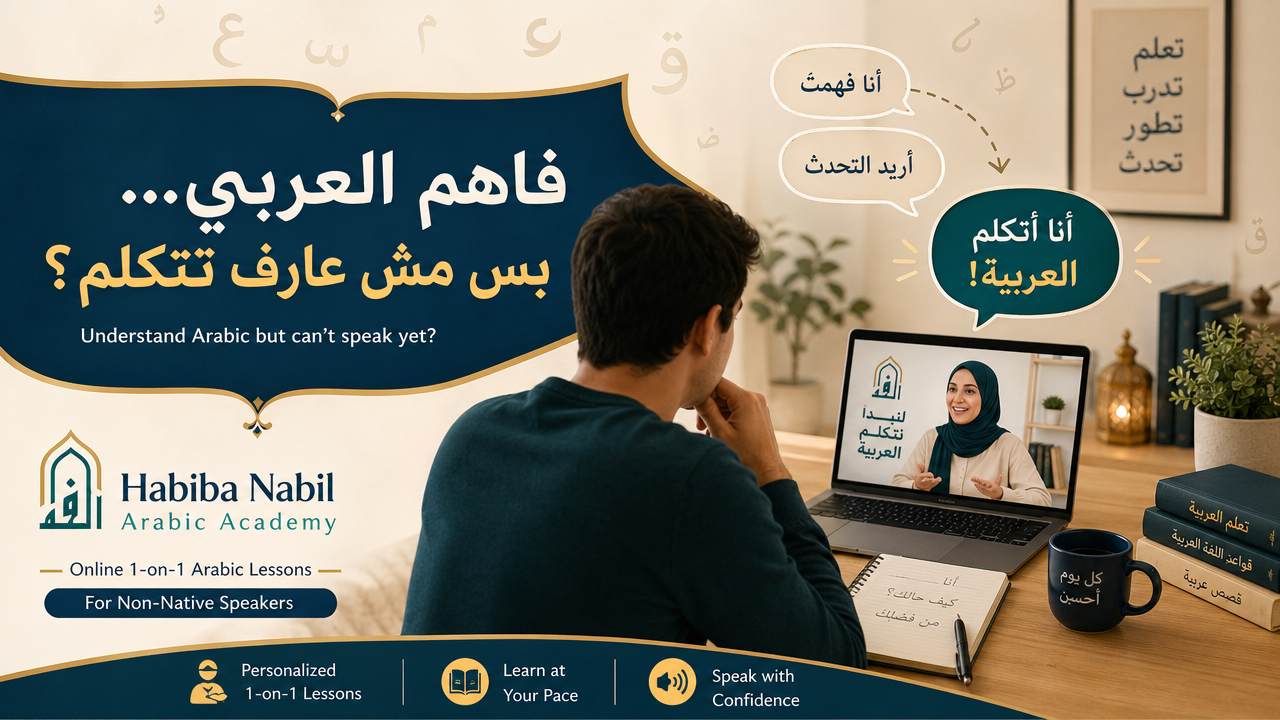
Many students understand Arabic when they hear it, but when it is time to speak, everything stops.

الطالب فاهم العربي… بس مش عارف يتكلم
The Student Understands Arabic… But Can’t Speak It Yet

في أول كام دقيقة من الحصة، قال لي أحد طلابي جملة بتتكرر كتير جدًا مع متعلمين العربي:
In the first few minutes of one lesson, one of my students said something I hear very often from Arabic learners:

“أنا فاهم لما أسمع… بس لما أتكلم مش عارف أقول إيه.”
“I understand when I listen… but when I speak, I don’t know what to say.”

الجملة دي بسيطة، لكنها بتشرح مشكلة كبيرة عند ناس كتير بتتعلم عربي.
This simple sentence explains a big problem many Arabic learners face.

الطالب كان يعرف كلمات. كان فاهم أسئلة بسيطة. وكان لما يسمع جملة عربية يقدر يخمّن معناها.
The student knew words. He understood simple questions. And when he heard Arabic sentences, he could often guess the meaning.

لكن أول ما أطلب منه يرد بجملة كاملة، كان يسكت.
But as soon as I asked him to answer in a full sentence, he became silent.

مش لأنه مش فاهم.
Not because he did not understand.

ومش لأنه مش مذاكر.
And not because he had not studied.

لكن لأن في فرق كبير بين “إني أفهم اللغة” و“إني أستخدم اللغة”.
But because there is a big difference between “understanding a language” and “using a language.”

كتير من الطلاب بيحفظوا كلمات عربية: بيت، أكل، مدرسة، شغل، صديق، ماء، أريد، عندي.
Many students memorize Arabic words: house, food, school, work, friend, water, I want, I have.

لكن لما يدخلوا في موقف حقيقي، مثل إنهم يطلبوا حاجة، يعرّفوا نفسهم، يسألوا سؤال، أو يردوا بسرعة… بيحسوا إن الكلمات اختفت.
But when they enter a real situation, like ordering something, introducing themselves, asking a question, or answering quickly… they feel the words have disappeared.

وهنا بيبدأ الإحباط.
And this is where frustration begins.

الطالب يقول: “أنا ناسي.”
The student says: “I forgot.”

لكن الحقيقة أحيانًا مش إنه نسي.
But the truth is, sometimes he did not forget.

الحقيقة إن الكلمات موجودة في الذاكرة، لكنها مش جاهزة للاستخدام.
The words are in the memory, but they are not ready for use.

زي شخص يعرف مكونات الطبخة، لكنه عمره ما دخل المطبخ يطبخ بنفسه.
It is like someone who knows the ingredients of a meal, but has never actually cooked it.

علشان كده، في تعليم العربي لغير الناطقين بيه، الحصة ماينفعش تكون حفظ كلمات بس.
That is why Arabic lessons for non-native speakers cannot be only about memorizing vocabulary.

لازم الطالب يسمع، يكرر، يجاوب، يغلط، يتصحح، ويجرب تاني.
The student needs to listen, repeat, answer, make mistakes, get corrected, and try again.

في الحصة دي، ما بدأتش بشرح طويل.
In that lesson, I did not start with a long explanation.

بدأنا بجمل قصيرة جدًا.
We started with very short sentences.

“أنا أريد…”
“I want…”

“عندي…”
“I have…”

“أنا أذهب إلى…”
“I go to…”

“أنا أعمل في…”
“I work in…”

وبعد كده دخلنا في أسئلة بسيطة.
Then we moved into simple questions.

ماذا تريد؟
What do you want?

أين تذهب؟
Where are you going?

ماذا عندك؟
What do you have?

أين تعمل؟
Where do you work?

في البداية، الطالب كان يرد بكلمة واحدة.
At first, the student answered with one word.

مثلاً: “ماء.”
For example: “Water.”

فبدل ما أقول له “غلط”، كنت أساعده يطوّل الجملة.
Instead of saying “wrong,” I helped him expand the sentence.

“أريد ماءً.”
“I want water.”

وبعدها: “أريد ماءً من فضلك.”
Then: “I want water, please.”

وبعدها: “أريد ماءً لأنني عطشان.”
Then: “I want water because I am thirsty.”

هنا الطالب بدأ يحس إن الكلام مش مستحيل.
Here, the student started to feel that speaking was not impossible.

هو مش محتاج يعرف 100 كلمة جديدة.
He did not need to know 100 new words.

هو محتاج يستخدم 10 كلمات يعرفهم بالفعل في مواقف مختلفة.
He needed to use 10 words he already knew in different situations.

بعد كده عملنا speaking scenario بسيط.
After that, we did a simple speaking scenario.

الموقف: أنت في كافيه وتريد أن تطلب مشروبًا.
Situation: You are in a café and you want to order a drink.

دور الطالب: يطلب، يسأل عن السعر، ويقول شكرًا.
Student role: order, ask about the price, and say thank you.

دور المعلم: يعمل دور الموظف.
Teacher role: act as the café worker.

في أول محاولة، الطالب احتاج مساعدة كتير.
In the first attempt, the student needed a lot of support.

في ثاني محاولة، اتكلم أسرع.
In the second attempt, he spoke faster.

في ثالث محاولة، بدأ يضيف من نفسه.
In the third attempt, he started adding his own words.

وهنا حصل التغيير الحقيقي.
And this is where the real change happened.

مش إن الطالب بقى “fluent” فجأة.
Not that the student suddenly became fluent.

لكن إنه حس لأول مرة إن العربي ممكن يخرج من فمه في موقف حقيقي.
But he felt for the first time that Arabic could come out of his mouth in a real situation.

ودي نقطة مهمة جدًا.
And this is a very important point.

الثقة في الكلام مش بتيجي من الحفظ فقط.
Speaking confidence does not come from memorization only.

الثقة بتيجي من التكرار داخل مواقف حقيقية.
Confidence comes from repetition inside real situations.

عشان كده طريقة التدريس لازم تمشي بشكل واضح:
That is why the teaching method needs a clear flow:

Input → Practice → Output

يعني الأول الطالب يسمع كلمات وجمل مفيدة.
First, the student hears useful words and phrases.

بعد كده يتدرب عليها بجمل قصيرة.
Then, he practices them in short sentences.

وبعدها يستخدمها في مهمة حقيقية أو role-play.
After that, he uses them in a real task or role-play.

لو الطالب فاهم العربي بس مش عارف يتكلم، فالحل مش إننا نغرقه في قواعد أكتر.
If the student understands Arabic but cannot speak, the solution is not to overload him with more grammar.

والحل مش إنه يحفظ قائمة كلمات أطول.
And the solution is not to memorize a longer word list.

الحل إنه يتكلم أكتر، لكن بطريقة منظمة وآمنة.
The solution is to speak more, but in a structured and safe way.

يتكلم بجمل قصيرة.
He speaks in short sentences.

يغلط بدون خوف.
He makes mistakes without fear.

يتصحح بهدوء.
He gets corrected gently.

ويعيد نفس الموقف أكثر من مرة لحد ما الجملة تبقى أسهل.
And he repeats the same situation more than once until the sentence becomes easier.

في النهاية، الطالب اللي كان بيقول “أنا فاهم بس مش عارف أتكلم” بدأ يقول جمل أطول.
In the end, the student who said “I understand but I can’t speak” started saying longer sentences.

بدأ يسأل.
He started asking.

بدأ يرد.
He started answering.

وبدأ يحس إن العربي مش مجرد مادة بيدرسها… لكنه لغة يقدر يستخدمها.
And he started feeling that Arabic was not just a subject to study… but a language he could use.

لو أنت كمان فاهم عربي شوية، لكن بتقف لما تيجي تتكلم، فده طبيعي جدًا.
If you also understand some Arabic but freeze when it is time to speak, that is completely normal.

أنت مش محتاج تبدأ من الصفر.
You do not need to start from zero.

أنت محتاج خطة تخلي الكلمات اللي جواك تتحول لكلام حقيقي.
You need a plan that turns the words inside you into real speech.

في Habiba Nabil Arabic Academy، الحصص بتكون 1-on-1 ومبنية على هدفك الحقيقي: كلام، استماع، قراءة، كتابة، أو عربي للشغل والحياة اليومية.
At Habiba Nabil Arabic Academy, lessons are 1-on-1 and built around your real goal: speaking, listening, reading, writing, or Arabic for work and daily life.

تقدر تبدأ بحصة Single Session مدتها 90 دقيقة بسعر الإطلاق AED 80 بدل AED 120.
You can start with a 90-minute Single Session at the launch price of AED 80 instead of AED 120.

احجز حصة، وجرب تتعلم العربي بطريقة عملية تخليك تستخدم اللغة، مش بس تحفظها.
Book a session and try learning Arabic in a practical way that helps you use the language, not just memorize it.

Related Articles