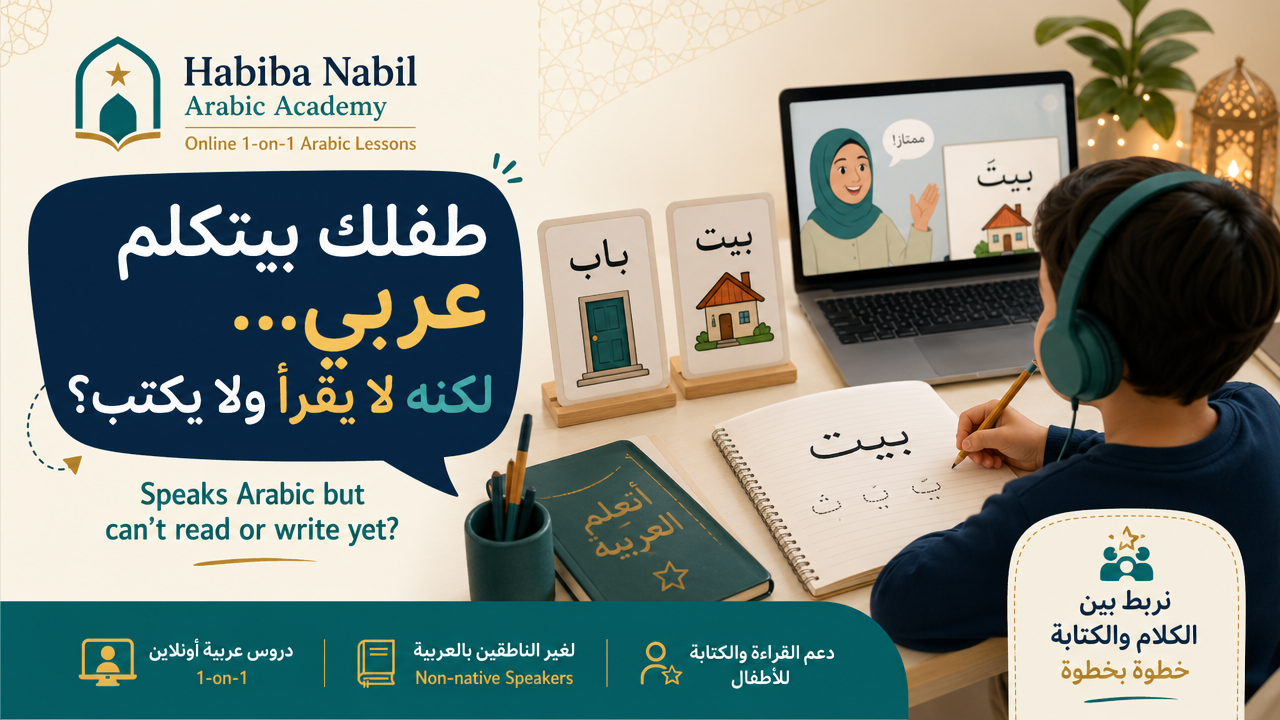
Many children speak Arabic fluently at home, but when they try to read a simple word or write a short sentence… they freeze.
طفل بيتكلم عربي… لكنه لا يقرأ ولا يكتب
A Child Speaks Arabic… But Cannot Read or Write
في أول حصة مع أحد الأطفال، كان واضح جدًا إنه بيفهم عربي كويس.
In the first lesson with one child, it was very clear that he understood Arabic well.
لما أسأله سؤال بسيط، يجاوب بسرعة.
When I asked him a simple question, he answered quickly.
لما أتكلم معاه عن البيت، المدرسة، الألعاب، أو الأكل، كان متفاعل.
When I spoke with him about home, school, games, or food, he was engaged.
وكان واضح إنه مش محتاج يبدأ من الصفر في الكلام.
It was clear that he did not need to start from zero in speaking.
لكن لما فتحت معاه كلمة عربية بسيطة… وقف.
But when I showed him a simple Arabic word… he stopped.
ولما طلبت منه يكتب حرفين جنب بعض، كتبهم منفصلين أو بشكل غير واضح.
And when I asked him to write two letters together, he wrote them separately or unclearly.
هنا تظهر مشكلة منتشرة جدًا عند بعض الأطفال العرب أو الأطفال اللي بيتكلموا عربي في البيت.
Here we see a very common problem among some Arab children or children who speak Arabic at home.
الطفل يتكلم عربي.
The child speaks Arabic.
يفهم عربي.
He understands Arabic.
يرد بالعربي.
He answers in Arabic.
لكن لا يقرأ ولا يكتب بسهولة.
But he cannot read or write easily.
بعض الأهالي يستغربوا جدًا.
Some parents feel very surprised.
يقولوا: “هو بيتكلم عربي كويس، ليه مش عارف يقرأ؟”
They say: “He speaks Arabic well, so why can’t he read?”
والإجابة المهمة هنا: الكلام مهارة، والقراءة والكتابة مهارات تانية.
The important answer is: speaking is one skill, and reading and writing are different skills.
الطفل ممكن يسمع اللغة من البيت كل يوم، فيكتسب الكلام والفهم بشكل طبيعي.
A child may hear the language at home every day, so he naturally develops speaking and listening.
لكن القراءة والكتابة لا تأتي فقط من السمع.
But reading and writing do not come only from listening.
لازم الطفل يتعلم شكل الحرف.
The child needs to learn the shape of the letter.
وصوت الحرف.
The sound of the letter.
واتجاه الكتابة من اليمين إلى اليسار.
The writing direction from right to left.
وشكل الحرف في أول الكلمة ووسطها وآخرها.
The shape of the letter at the beginning, middle, and end of the word.
والفرق بين الحروف المتشابهة.
And the difference between similar letters.
مثل: ب، ت، ث.
Like: ب, ت, ث.
ومثل: ج، ح، خ.
And: ج, ح, خ.
ومثل: د، ذ، ر، ز.
And: د, ذ, ر, ز.
بالنسبة للطفل، هذه التفاصيل ليست سهلة كما تبدو للكبار.
For a child, these details are not as easy as they seem to adults.
الحرف العربي يتغير شكله حسب مكانه في الكلمة.
The Arabic letter changes its shape depending on its position in the word.
حرف الباء في أول الكلمة ليس مثل حرف الباء في آخر الكلمة.
The letter ب at the beginning of a word does not look exactly like ب at the end.
وكذلك بعض الحروف تتصل، وبعض الحروف لا تتصل بعدها.
Also, some letters connect, while some letters do not connect after them.
لذلك الطفل قد يعرف الحرف وحده، لكنه لا يعرفه داخل الكلمة.
So the child may know the letter alone, but not recognize it inside a word.
قد يقول: “ده حرف باء.”
He may say: “This is the letter ب.”
لكن عندما يرى كلمة “باب” أو “بيت”، لا يستطيع قراءتها بسهولة.
But when he sees the word “باب” or “بيت,” he cannot read it easily.
وهنا لا نقول إن الطفل ضعيف في العربي.
Here, we should not say the child is weak in Arabic.
بل نقول إنه يحتاج تأسيس قراءة وكتابة.
We say he needs a foundation in Arabic literacy.
وهذا فرق مهم جدًا.
And this is a very important difference.
لأن الطفل الذي يتكلم عربي لا يحتاج حصة محادثة عادية.
Because a child who already speaks Arabic does not need a regular conversation lesson.
هو يحتاج حصة تركّز على الحروف، القراءة، الكتابة، الربط، والإملاء البسيط.
He needs a lesson that focuses on letters, reading, writing, joining letters, and simple dictation.
في الحصة، لا أبدأ بنص طويل.
In the lesson, I do not start with a long text.
ولا أطلب من الطفل يقرأ جمل كثيرة من أول مرة.
And I do not ask the child to read many sentences from the beginning.
أبدأ بحروف قليلة.
I start with a few letters.
ثم نلعب لعبة تمييز الحروف.
Then we play a letter recognition game.
أين حرف ب؟
Where is the letter ب?
أين حرف ت؟
Where is the letter ت?
ما الفرق بين ب وت؟
What is the difference between ب and ت?
بعدها ننتقل إلى التوصيل.
After that, we move to joining letters.
ب + ا = با
ب + ا = با
ت + ا = تا
ت + ا = تا
ثم نقرأ كلمات بسيطة جدًا.
Then we read very simple words.
باب
door
بيت
house
تب
short syllable practice
بعد ذلك نكتب.
After that, we write.
لكن الكتابة لا تكون مرة واحدة فقط.
But writing is not done only one time.
نستخدم التتبع.
We use tracing.
ثم النسخ.
Then copying.
ثم الكتابة بمساعدة.
Then writing with support.
ثم إملاء بسيط جدًا.
Then very simple dictation.
كل خطوة صغيرة تبني ثقة الطفل.
Every small step builds the child’s confidence.
المهم ألا يشعر الطفل أن القراءة عقاب.
The important thing is that the child should not feel that reading is a punishment.
ولا أن الكتابة اختبار صعب كل مرة.
And writing should not feel like a difficult test every time.
الطفل يتعلم أفضل عندما تكون الحصة فيها ألعاب، صور، ألوان، تحديات قصيرة، ومكافآت بسيطة.
A child learns better when the lesson includes games, pictures, colors, short challenges, and simple rewards.
خصوصًا في سن صغير، لا يصلح أن تكون الحصة شرح طويل.
Especially at a young age, the lesson should not be a long explanation.
لازم النشاط يتغير كل 5 إلى 10 دقائق.
The activity needs to change every 5 to 10 minutes.
لعبة حروف.
A letter game.
توصيل صورة بحرف.
Matching a picture with a letter.
كتابة على السطر.
Writing on the line.
قراءة كلمة.
Reading a word.
تصحيح حرف.
Correcting a letter.
إملاء بسيط.
Simple dictation.
تحدي نجوم.
A star challenge.
بهذه الطريقة، يبدأ الطفل يفهم أن القراءة والكتابة ليست شيئًا مخيفًا.
In this way, the child starts to understand that reading and writing are not scary.
هي مهارة تتبني خطوة بخطوة.
They are skills built step by step.
وفي نفس الوقت، لا ننسى أن الطفل عنده نقطة قوة مهمة جدًا: هو يفهم ويتكلم عربي.
At the same time, we should not forget that the child has a very important strength: he understands and speaks Arabic.
وهذا يساعده كثيرًا في القراءة.
And this helps him a lot with reading.
لأنه عندما يقرأ كلمة يعرف معناها من الكلام، يصبح التعلم أسهل.
Because when he reads a word he already knows from speaking, learning becomes easier.
مثلًا، إذا كان الطفل يعرف كلمة “بيت” في الكلام، ثم تعلم يقرأها، سيشعر بفرحة كبيرة.
For example, if the child already knows the word “بيت” in speaking, then learns to read it, he feels very happy.
لأنه لم يتعلم كلمة جديدة فقط.
Because he did not only learn a new word.
هو اكتشف أن الكلمة التي يقولها لها شكل مكتوب.
He discovered that the word he says has a written shape.
وهنا يبدأ الربط الحقيقي بين الكلام والقراءة.
This is where the real connection between speaking and reading begins.
ثم بعد فترة، يبدأ يقرأ كلمات قصيرة.
Then after some time, he starts reading short words.
وبعدها جمل قصيرة.
Then short sentences.
مثل: أنا ولد.
Like: I am a boy.
هذا بيت.
This is a house.
هذا باب.
This is a door.
أنا أحب أمي.
I love my mother.
ومع الوقت، تتحول القراءة من مجهود كبير إلى عادة أسهل.
Over time, reading changes from a big effort into an easier habit.
والكتابة أيضًا تتحسن.
Writing also improves.
الحروف تصبح أوضح.
The letters become clearer.
والربط بين الحروف يصبح أفضل.
The joining between letters becomes better.
والطفل يبدأ يكتب كلمات بسيطة بدون خوف.
And the child starts writing simple words without fear.
لذلك، لو طفلك بيتكلم عربي لكنه لا يقرأ ولا يكتب، لا تقلق.
So, if your child speaks Arabic but cannot read or write, do not worry.
هذا لا يعني أنه متأخر في اللغة كلها.
This does not mean he is behind in the whole language.
لكنه يحتاج خطة مناسبة للقراءة والكتابة.
He needs a suitable plan for reading and writing.
خطة تبدأ بالحروف.
A plan that starts with letters.
ثم الأصوات.
Then sounds.
ثم تركيب المقاطع.
Then building syllables.
ثم قراءة الكلمات.
Then reading words.
ثم كتابة الكلمات.
Then writing words.
ثم جمل قصيرة.
Then short sentences.
في Habiba Nabil Arabic Academy، نساعد الأطفال على بناء القراءة والكتابة العربية بطريقة بسيطة، مرحة، ومنظمة.
At Habiba Nabil Arabic Academy, we help children build Arabic reading and writing in a simple, fun, and structured way.
الحصة تكون 1-on-1، مناسبة لعمر الطفل، وتركز على مستواه الحقيقي، وليس فقط على عمره أو قدرته على الكلام.
The lesson is 1-on-1, suitable for the child’s age, and focused on his real level, not only his age or speaking ability.
إذا كان طفلك يتكلم عربي لكنه لا يقرأ ولا يكتب، يمكنك البدء بحصة Single Session مدتها 90 دقيقة بسعر الإطلاق AED 80 بدل AED 120.
If your child speaks Arabic but cannot read or write, you can start with a 90-minute Single Session at the launch price of AED 80 instead of AED 120.
احجز حصة، وخلّينا نعرف مستوى طفلك ونبدأ معه خطوة بخطوة.
Book a session, and let’s understand your child’s level and start step by step.
A Child Speaks Arabic… But Cannot Read or Write
في أول حصة مع أحد الأطفال، كان واضح جدًا إنه بيفهم عربي كويس.
In the first lesson with one child, it was very clear that he understood Arabic well.
لما أسأله سؤال بسيط، يجاوب بسرعة.
When I asked him a simple question, he answered quickly.
لما أتكلم معاه عن البيت، المدرسة، الألعاب، أو الأكل، كان متفاعل.
When I spoke with him about home, school, games, or food, he was engaged.
وكان واضح إنه مش محتاج يبدأ من الصفر في الكلام.
It was clear that he did not need to start from zero in speaking.
لكن لما فتحت معاه كلمة عربية بسيطة… وقف.
But when I showed him a simple Arabic word… he stopped.
ولما طلبت منه يكتب حرفين جنب بعض، كتبهم منفصلين أو بشكل غير واضح.
And when I asked him to write two letters together, he wrote them separately or unclearly.
هنا تظهر مشكلة منتشرة جدًا عند بعض الأطفال العرب أو الأطفال اللي بيتكلموا عربي في البيت.
Here we see a very common problem among some Arab children or children who speak Arabic at home.
الطفل يتكلم عربي.
The child speaks Arabic.
يفهم عربي.
He understands Arabic.
يرد بالعربي.
He answers in Arabic.
لكن لا يقرأ ولا يكتب بسهولة.
But he cannot read or write easily.
بعض الأهالي يستغربوا جدًا.
Some parents feel very surprised.
يقولوا: “هو بيتكلم عربي كويس، ليه مش عارف يقرأ؟”
They say: “He speaks Arabic well, so why can’t he read?”
والإجابة المهمة هنا: الكلام مهارة، والقراءة والكتابة مهارات تانية.
The important answer is: speaking is one skill, and reading and writing are different skills.
الطفل ممكن يسمع اللغة من البيت كل يوم، فيكتسب الكلام والفهم بشكل طبيعي.
A child may hear the language at home every day, so he naturally develops speaking and listening.
لكن القراءة والكتابة لا تأتي فقط من السمع.
But reading and writing do not come only from listening.
لازم الطفل يتعلم شكل الحرف.
The child needs to learn the shape of the letter.
وصوت الحرف.
The sound of the letter.
واتجاه الكتابة من اليمين إلى اليسار.
The writing direction from right to left.
وشكل الحرف في أول الكلمة ووسطها وآخرها.
The shape of the letter at the beginning, middle, and end of the word.
والفرق بين الحروف المتشابهة.
And the difference between similar letters.
مثل: ب، ت، ث.
Like: ب, ت, ث.
ومثل: ج، ح، خ.
And: ج, ح, خ.
ومثل: د، ذ، ر، ز.
And: د, ذ, ر, ز.
بالنسبة للطفل، هذه التفاصيل ليست سهلة كما تبدو للكبار.
For a child, these details are not as easy as they seem to adults.
الحرف العربي يتغير شكله حسب مكانه في الكلمة.
The Arabic letter changes its shape depending on its position in the word.
حرف الباء في أول الكلمة ليس مثل حرف الباء في آخر الكلمة.
The letter ب at the beginning of a word does not look exactly like ب at the end.
وكذلك بعض الحروف تتصل، وبعض الحروف لا تتصل بعدها.
Also, some letters connect, while some letters do not connect after them.
لذلك الطفل قد يعرف الحرف وحده، لكنه لا يعرفه داخل الكلمة.
So the child may know the letter alone, but not recognize it inside a word.
قد يقول: “ده حرف باء.”
He may say: “This is the letter ب.”
لكن عندما يرى كلمة “باب” أو “بيت”، لا يستطيع قراءتها بسهولة.
But when he sees the word “باب” or “بيت,” he cannot read it easily.
وهنا لا نقول إن الطفل ضعيف في العربي.
Here, we should not say the child is weak in Arabic.
بل نقول إنه يحتاج تأسيس قراءة وكتابة.
We say he needs a foundation in Arabic literacy.
وهذا فرق مهم جدًا.
And this is a very important difference.
لأن الطفل الذي يتكلم عربي لا يحتاج حصة محادثة عادية.
Because a child who already speaks Arabic does not need a regular conversation lesson.
هو يحتاج حصة تركّز على الحروف، القراءة، الكتابة، الربط، والإملاء البسيط.
He needs a lesson that focuses on letters, reading, writing, joining letters, and simple dictation.
في الحصة، لا أبدأ بنص طويل.
In the lesson, I do not start with a long text.
ولا أطلب من الطفل يقرأ جمل كثيرة من أول مرة.
And I do not ask the child to read many sentences from the beginning.
أبدأ بحروف قليلة.
I start with a few letters.
ثم نلعب لعبة تمييز الحروف.
Then we play a letter recognition game.
أين حرف ب؟
Where is the letter ب?
أين حرف ت؟
Where is the letter ت?
ما الفرق بين ب وت؟
What is the difference between ب and ت?
بعدها ننتقل إلى التوصيل.
After that, we move to joining letters.
ب + ا = با
ب + ا = با
ت + ا = تا
ت + ا = تا
ثم نقرأ كلمات بسيطة جدًا.
Then we read very simple words.
باب
door
بيت
house
تب
short syllable practice
بعد ذلك نكتب.
After that, we write.
لكن الكتابة لا تكون مرة واحدة فقط.
But writing is not done only one time.
نستخدم التتبع.
We use tracing.
ثم النسخ.
Then copying.
ثم الكتابة بمساعدة.
Then writing with support.
ثم إملاء بسيط جدًا.
Then very simple dictation.
كل خطوة صغيرة تبني ثقة الطفل.
Every small step builds the child’s confidence.
المهم ألا يشعر الطفل أن القراءة عقاب.
The important thing is that the child should not feel that reading is a punishment.
ولا أن الكتابة اختبار صعب كل مرة.
And writing should not feel like a difficult test every time.
الطفل يتعلم أفضل عندما تكون الحصة فيها ألعاب، صور، ألوان، تحديات قصيرة، ومكافآت بسيطة.
A child learns better when the lesson includes games, pictures, colors, short challenges, and simple rewards.
خصوصًا في سن صغير، لا يصلح أن تكون الحصة شرح طويل.
Especially at a young age, the lesson should not be a long explanation.
لازم النشاط يتغير كل 5 إلى 10 دقائق.
The activity needs to change every 5 to 10 minutes.
لعبة حروف.
A letter game.
توصيل صورة بحرف.
Matching a picture with a letter.
كتابة على السطر.
Writing on the line.
قراءة كلمة.
Reading a word.
تصحيح حرف.
Correcting a letter.
إملاء بسيط.
Simple dictation.
تحدي نجوم.
A star challenge.
بهذه الطريقة، يبدأ الطفل يفهم أن القراءة والكتابة ليست شيئًا مخيفًا.
In this way, the child starts to understand that reading and writing are not scary.
هي مهارة تتبني خطوة بخطوة.
They are skills built step by step.
وفي نفس الوقت، لا ننسى أن الطفل عنده نقطة قوة مهمة جدًا: هو يفهم ويتكلم عربي.
At the same time, we should not forget that the child has a very important strength: he understands and speaks Arabic.
وهذا يساعده كثيرًا في القراءة.
And this helps him a lot with reading.
لأنه عندما يقرأ كلمة يعرف معناها من الكلام، يصبح التعلم أسهل.
Because when he reads a word he already knows from speaking, learning becomes easier.
مثلًا، إذا كان الطفل يعرف كلمة “بيت” في الكلام، ثم تعلم يقرأها، سيشعر بفرحة كبيرة.
For example, if the child already knows the word “بيت” in speaking, then learns to read it, he feels very happy.
لأنه لم يتعلم كلمة جديدة فقط.
Because he did not only learn a new word.
هو اكتشف أن الكلمة التي يقولها لها شكل مكتوب.
He discovered that the word he says has a written shape.
وهنا يبدأ الربط الحقيقي بين الكلام والقراءة.
This is where the real connection between speaking and reading begins.
ثم بعد فترة، يبدأ يقرأ كلمات قصيرة.
Then after some time, he starts reading short words.
وبعدها جمل قصيرة.
Then short sentences.
مثل: أنا ولد.
Like: I am a boy.
هذا بيت.
This is a house.
هذا باب.
This is a door.
أنا أحب أمي.
I love my mother.
ومع الوقت، تتحول القراءة من مجهود كبير إلى عادة أسهل.
Over time, reading changes from a big effort into an easier habit.
والكتابة أيضًا تتحسن.
Writing also improves.
الحروف تصبح أوضح.
The letters become clearer.
والربط بين الحروف يصبح أفضل.
The joining between letters becomes better.
والطفل يبدأ يكتب كلمات بسيطة بدون خوف.
And the child starts writing simple words without fear.
لذلك، لو طفلك بيتكلم عربي لكنه لا يقرأ ولا يكتب، لا تقلق.
So, if your child speaks Arabic but cannot read or write, do not worry.
هذا لا يعني أنه متأخر في اللغة كلها.
This does not mean he is behind in the whole language.
لكنه يحتاج خطة مناسبة للقراءة والكتابة.
He needs a suitable plan for reading and writing.
خطة تبدأ بالحروف.
A plan that starts with letters.
ثم الأصوات.
Then sounds.
ثم تركيب المقاطع.
Then building syllables.
ثم قراءة الكلمات.
Then reading words.
ثم كتابة الكلمات.
Then writing words.
ثم جمل قصيرة.
Then short sentences.
في Habiba Nabil Arabic Academy، نساعد الأطفال على بناء القراءة والكتابة العربية بطريقة بسيطة، مرحة، ومنظمة.
At Habiba Nabil Arabic Academy, we help children build Arabic reading and writing in a simple, fun, and structured way.
الحصة تكون 1-on-1، مناسبة لعمر الطفل، وتركز على مستواه الحقيقي، وليس فقط على عمره أو قدرته على الكلام.
The lesson is 1-on-1, suitable for the child’s age, and focused on his real level, not only his age or speaking ability.
إذا كان طفلك يتكلم عربي لكنه لا يقرأ ولا يكتب، يمكنك البدء بحصة Single Session مدتها 90 دقيقة بسعر الإطلاق AED 80 بدل AED 120.
If your child speaks Arabic but cannot read or write, you can start with a 90-minute Single Session at the launch price of AED 80 instead of AED 120.
احجز حصة، وخلّينا نعرف مستوى طفلك ونبدأ معه خطوة بخطوة.
Book a session, and let’s understand your child’s level and start step by step.